Lambert Home’s Guide to Insulation
Insulation, woo hoo!!! Lol, talk about the least sexy topic in the design/construction world!! Insulation is one of those things in a home that nobody gets excited about; nobody walks into a house and says, “Wow, I can tell you really splurged for your insulation!” But when it’s bad? Oh, it’s very clear.
Let's talk about some signs that your insulation isn't working for you. The upstairs in your home will be 15 degrees hotter than the downstairs, the AC will run non-stop, and your bedroom may be freezing in the winter. If any of these are true for you, it may be time to consider whether your insulation needs updating! Because at the end of the day, it's one of those gutty, low-appeal projects that actually really affects life in your home!
So what is insulation? And what is most effective? I literally think of a foam cooler you get at 7/11, an old Coleman ice chest, or a heavy-duty Yeti. They’re all insulating your cold beer, but some are more effective than others! So, from a different angle, let’s take a look at our most common types of insulation and the pros and cons of each type!!!
Batt Insulation
You can buy this in rolls or strips at Home Depot. It’s affordable. Readily available. And great for a DIYer. It’s most commonly installed in exterior and interior walls, attics, floors, and crawl spaces. But as far as quality, it’s the foam cooler from 7/11. If you’re completing a budget-conscious project and aren’t too worried about underperformance in insulation, this might be your pick. Just be conscious of the lack of air-sealing capabilities!
Blown-in Insulation
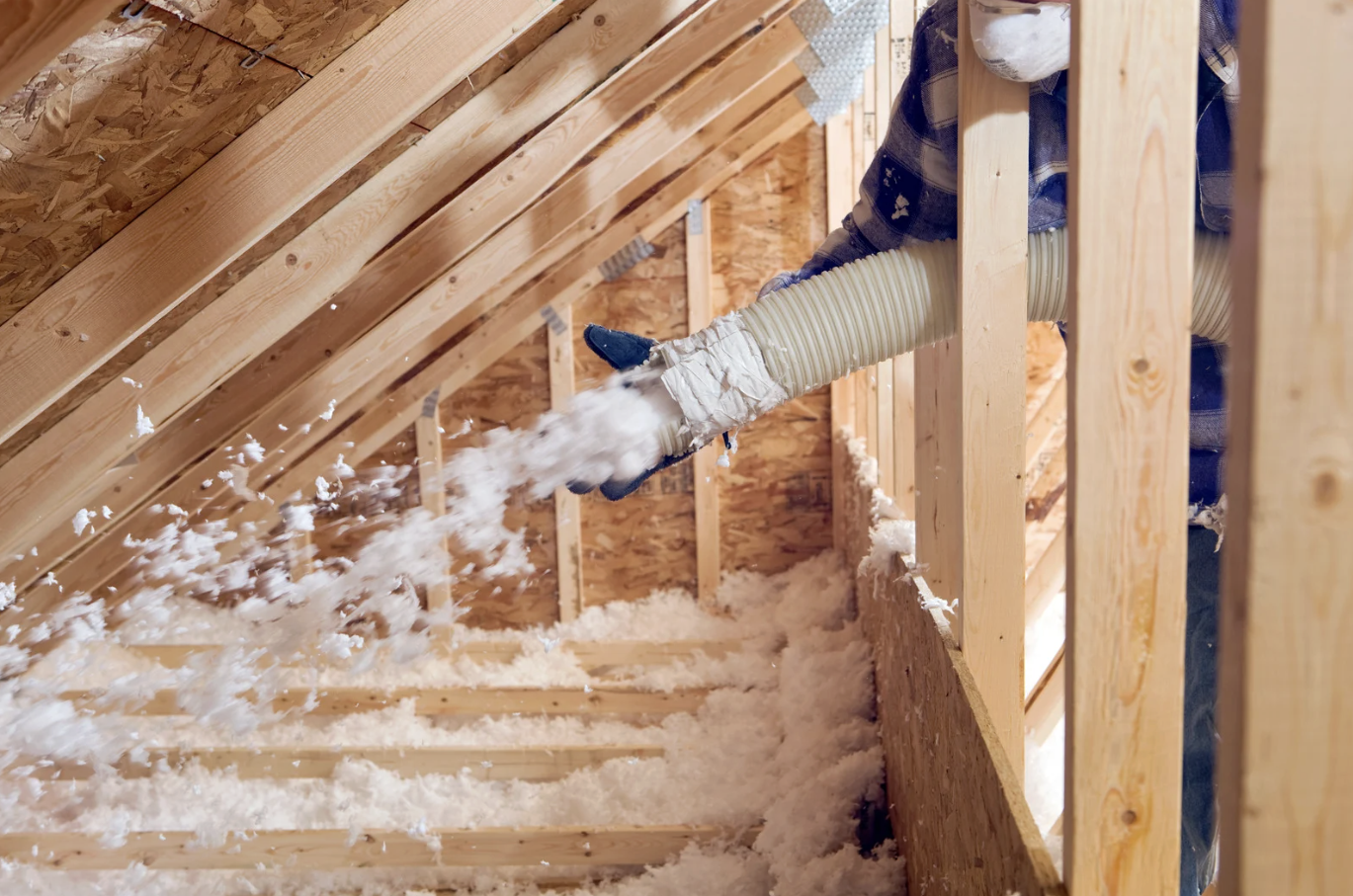
Blown-in insulation is almost exclusively used in attics and looks like fluffy shredded paper. This is often used in concert with batt insulation and is also typically an after-market addition. Unlike batt insulation, blown-in fills every nook and cranny, providing more coverage. Nonetheless, it happens to be more susceptible to moisture, leading to mold growth and reduced effectiveness. Think of that old Coleman cooler you’ve had for years. It’s started absorbing moisture and doesn’t work as well as it used to. The same thing can happen with blown-in insulation when it becomes damp. Honestly, if you’re ever in the market for insulation, I say save your money.
SPRAY FOAM
Spray Foam!!! This is absolutely the Yeti cooler of the insulation world and for good reason. There are several levels of spray foam, but essentially, it creates a very tight seal and does a great job of keeping your home warm in the winter and cool in the summer.
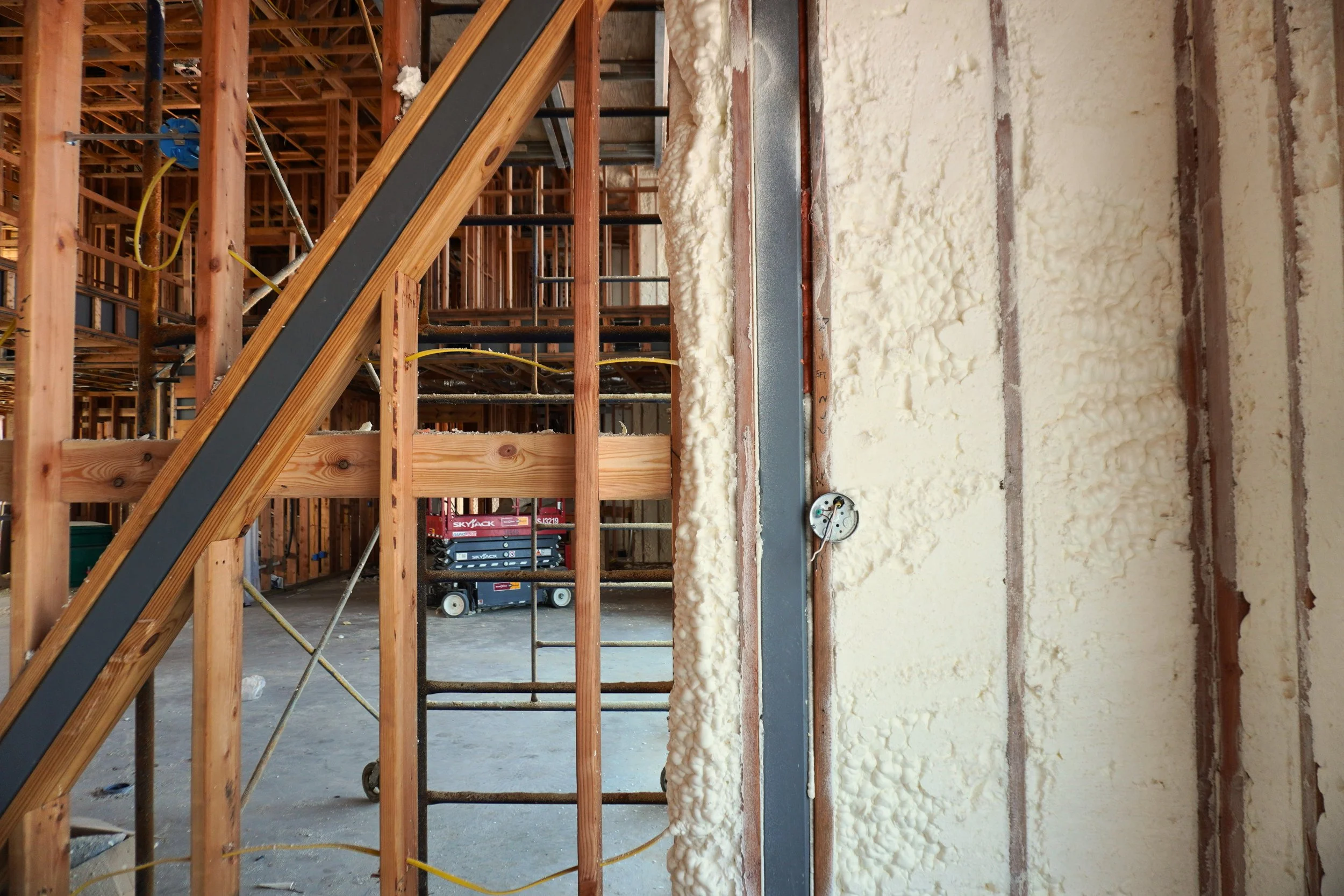
Above you’ll see the behind-the-scenes of the construction on our very own headquarters! With a completely new build, spray foam was the perfect selection for us. The spray foam filled every crack and every crevice, making it easy to maintain a consistent temperature throughout the whole building.
However, depending on the project, there can be significant drawbacks. Firstly, it's expensive. Secondly, spray foam can typically only be installed if you've taken a home all the way down to the studs. For that reason, if it's not original to the house, we often only see it used in attic remodels. Furthermore, remodeling work in the walls can be difficult in the years to come because the spray foam is literally taking up all the space. It can void your roof shingle warranty and be dangerous if not planned for, with proper ventilation and air exchange!! Depending on your needs, spray foam could be right for your project — or not!

Okay, that sounds like a lot of cons, but in Texas, this is the stuff that will actually reduce your electric bill in the summer! Home insulation is crucial to turning your house into a comfortable, energy-efficient space. Although each type of insulation has its own benefits and drawbacks, there is an option out there that works for you!
Make your house feel like a home! Why spend all your time in a space you can’t even feel comfortable in? We want to help you make the right switches to curate the cozy hideaway of your dreams. Whether you’re looking to escape extreme temperatures or require any updates regarding remodels or renovations, don’t worry! We’re here to help you and meet all of your needs!